Most AI generates artifacts.
Alethic builds belief.

Critical physical infrastructure cannot be run on plausible-sounding text.

Alethic builds belief-state world models that predict the next state of the world — not the next token — and gate every decision behind auditable, physically admissible reasoning.

Explore the verticals How Mundus works
2
Live Verticals
4
High-Stakes Sectors Mapped
1
Core Engine — Mundus
The Ceiling

Beyond the ceiling of the artifact economy

Language models generate plausible descriptions of the world. They are exceptional at producing artifacts — text, code, images.

But they do not natively understand uncertainty, and they conflate what is likely with what they want. Critical physical infrastructure needs something else entirely.

“What sounds right”

Agentic LLMs are trained to produce the next plausible token. When pushed into high-stakes, physical decision-making, their internal sense of "likely" quietly drifts toward "desired" — an anti-correlation the team has directly measured in financial decision-making. There is no mechanism to separate a good-sounding answer from a physically admissible one.

“What is actually possible”

Mundus predicts the next state of the world as a belief distribution, then filters every candidate outcome through explicit, auditable physical admissibility gates. A human can trace exactly why a decision was accepted or rejected — laws with teeth, not a confident guess.

Belief State Admissibility Gate Observe Dream
Mundus
The Core Engine

Mundus is a belief-state world model

Mundus predicts the next state of the world, not the next token. It represents any high-stakes domain as an evolving belief distribution, imagines a diverse set of plausible futures rather than a single guess, and rejects any forecast that is not physically reachable from the current state. This is the architectural moat every Alethic vertical is built on.

  • 01

    Believes, doesn't guess. A distribution over plausible futures, not one point prediction — so the system can tell you not just that risk is rising, but which shape it is likely to take.

  • 02

    Physically admissible gates. A constructor-theoretic filter rejects any imagined outcome that cannot be reached from the current state under the model's own dynamics — an explicit, auditable sanity check with no analogue in a black-box model.

  • 03

    Calibrated, not confident. The system knows what it doesn't know, and escalates to a human when uncertainty is too high — rather than producing a fluent, wrong answer.

One Engine, Many Domains

Mundus, branching into every high-stakes decision

The same belief-state architecture — attribute lattice, admissibility gates, calibrated uncertainty — is re-forged for each domain's own physics. Two verticals are already live. The rest of the roadmap targets the highest willingness-to-pay, highest-stakes industrial monopolies: orbital operations, and critical care.

FinanceFootballSpace & PhysicsCritical Care

Live Products

Live · Design Partner
RuneQ RuneQ
Finance

RuneQ

Mundus applied to financial markets

RuneQ encodes "what the market is doing right now" not as a list of hand-engineered indicators, but as a single density matrix. It evolves forward under a Lindblad master equation to predict quantum-statistical futures.

  • Density-Matrix World State: Represents uncertain but statistically well-defined market states.

  • Constructor-Theoretic Gating: Dreams up 32 counterfactual branches nightly, rejecting any future not physically reachable from the current state.

Lindblad dynamicsExclusive licensingDesign Partner: Global Funds
Live · Design Partner
Vantage
Football

Vantage

Mundus applied to elite football coordination

Vantage turns raw 25Hz coordinate tracking into a 27-state discrete tactical lattice. It predicts defensive coordination breakdowns up to 10 seconds before they become a shot, strictly governed by falsifiable physical laws.

  • Physical Admissibility: Warns coaches of breakdowns with zero physical-law violations across independent tracking cohorts.

  • Live Coach Console: Runs the belief-state model at under 2.3ms end-to-end per frame, shipped as an in-match dashboard.

25Hz tracking27-state tactical latticeDesign Partner: Tier 1 Leagues

Frontier (Planned)

Frontier
Orbital Conjunction
Space & Physics

Orbital Assessment

The physics frontier

High-stakes decisions involving multi-million-dollar orbital maneuvers require exact, transparent physical models — precisely the domain fit for Mundus. Orbital conjunction assessment extends the same belief-state, physically-gated reasoning to space-traffic decisions where a wrong call is unrecoverable and un-auditable black-box confidence isn't acceptable.

Conjunction assessmentPhysical law gatingIndustrial monopoly
Frontier
Trust Ledger
Critical Care

Critical Care Trust Ledger

The ultimate destination

Replacing brittle noise thresholds with calibrated deterioration probabilities. An ethically enforced "do no harm" and "I don't know" that triggers human escalation the moment uncertainty crosses an acceptable line — automation of a high-stakes physical decision that uncalibrated LLM agents fundamentally cannot be trusted with.

Calibrated deterioration riskHuman escalationEthical gating
Closing the Loop

Ipse: unbounded autonomy, governed

Mundus provides the calibrated world model. Ipse evolves from it by building a self-model that can perceive, act, and learn autonomously.

Autonomy isn't a new architecture bolted on top — it's the foundational world model with three loops closed over a governed self-model.

1
Action
2
Curiosity
3
Learning
1

Action

The self-model acts in the world, not just describes it — proposals are filtered through the same physical admissibility gates that govern Mundus's forecasts.

2

Curiosity

Active falsification: the system seeks out the observations most likely to break its current beliefs, rather than passively waiting for data.

3

Continual Learning

The governed self-model updates from experience records — forecasts, outcomes, calibration scores, falsification events — closing the loop without drifting from what's provably admissible.

The founding team

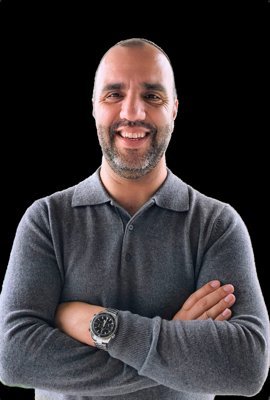
Ricardo Pereira

Ricardo Pereira

Co-Founder · Managing Director

Veteran of global tech leaders. Two decades scaling technology in startups and enterprise. MSc, Computer Science & Business.

Designed the belief-state formalism, the gate methodology, and the constructor-theoretic laws layer — as well as the original architecture combining dreaming and observing for a finance world-model representation and prediction.

Abhigyan Mishra

Abhigyan Mishra

Co-Founder · Head of AI & Quantum

Quantum and high-performance computing expert. Industrial R&D applications across high-stakes settings. PhD, Computer Science.

Built the tensor representations behind Mundus's financial-markets and football applications — shipped Vantage end-to-end, from density-operator dynamics to a sub-2.3ms coach console used live in-match.

We've been building novel AI architectures for the last 24 months, with backgrounds in the space going back more than five years — with real-world implementations across industries.

Confidential — By Invitation

Most AI generates artifacts.
Alethic builds belief.

Lisbon, Portugal. For design-partner and investor inquiries, reach out directly.

Contact Alethic